
This guide explains how to create and sell digital products step by step, using simple tools and beginner-friendly methods. If you’ve ever thought, “What can I sell online?”, this guide is for you. Creating and selling digital products has become one of the most practical ways to make money online, especially for beginners who don’t want the stress of physical inventory, delivery logistics, or large startup capital.
A digital product allows you to package knowledge, skills, or solutions into something people can buy and download instantly. What makes digital products powerful is scalability. Once you create a digital product, you can sell it to one person or one thousand people without extra production costs.
Digital products allow you to turn knowledge, skills, or experience into income without worrying about inventory, delivery, or location. With the right idea and simple tools, anyone can create a product once and sell it repeatedly to people who need the solution.
What Is a Digital Product?
A digital product is any product that exists in electronic form and can be delivered online without physical shipping. Customers pay for it and receive access instantly through email, download links, or online platforms.
Common examples of digital products include:
Ebooks and guides
PDF checklists and planners
Templates (Canva, CVs, invoices, spreadsheets)
Online courses and tutorials
Stock photos, graphics, or designs
Music, beats, or sound effects
Software, plugins, or digital tools
Unlike physical products, digital products:
Do not require storage
Do not expire
Can be updated easily
Can be sold repeatedly
This is why digital products are ideal for beginners.
READ ALSO: How to Learn Digital Marketing from Scratch – A Beginner’s Guide
Why Digital Products Are Perfect for Beginners
Digital products remove many of the barriers that stop people from starting a business.
1. Low Startup Cost
You don’t need to buy inventory, rent a shop, or hire staff. Most digital products can be created with free or low-cost tools.
2. No Logistics or Delivery Stress
There is no packaging, shipping, or delivery delay. Customers receive what they paid for instantly.
3. High Profit Margin
After creating the product once, every sale is mostly profit. There are no recurring production costs.
4. You Can Start With What You Know
You don’t need to be an expert. If you know how to do something that others struggle with, you already have a potential product.
5. Flexible and Scalable
You can sell to people in different locations without changing your process.
For beginners, digital products are one of the safest ways to enter an online business.
How to Create and Sell Digital Products Step by Step
Take the steps given below to get started with creating and selling digital products with ease.
Step 1: Choose the Right Digital Product Idea
The success of your digital product depends heavily on the problem it solves. Beginners often make the mistake of creating a product based only on passion, without checking if people actually want it. A good digital product idea should:
Solve a specific problem
Be easy to understand
Be useful to a defined group of people
Beginner-friendly product ideas:
Below are some of the products you can start with as a beginner.
“How-to” PDF guides
Checklists and planners
Templates for work or business
Beginner courses
Step-by-step ebooks
Examples:
A budgeting template for beginners
A CV template for job seekers
A guide on starting a small online business
A social media content planner
People pay for clarity, structure, and saved time.
Step 2: Validate Your Idea Before Creating Anything
Validation means checking whether people are interested in your idea before you spend time creating it. Simple validation methods include:
Search the topic on Google and YouTube
Check platforms like Selar, Gumroad, and Etsy
Look at the questions people ask in Facebook or WhatsApp groups
Read comments on posts related to the topic
If people are asking questions, complaining about a problem, or buying similar products, your idea is valid.
Validation helps you avoid creating products nobody wants.
Step 3: Decide the Best Format for Your Digital Product
As a beginner, simplicity is key. You don’t need to create a complicated course or software. The best formats for beginners are as follows.
PDF guide
Ebook
Template
Checklist
Workbook
PDFs are especially good because:
They are easy to create
They work on any device
They are easy to update
Buyers understand how to use them
Start small. You can always expand later.
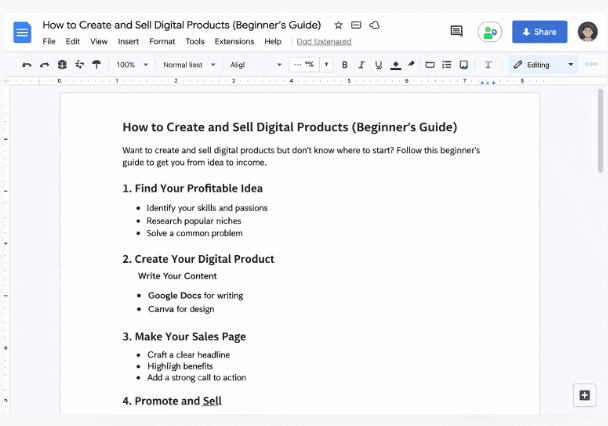
Step 4: Create Your Digital Product (Beginner Tools)
You don’t need advanced software or expensive equipment. Below are the beginner-friendly tools you need.
Google Docs – writing and formatting
Microsoft Word – document creation
Canva – design and layout
Google Sheets / Excel – templates and planners
Focus on:
Clear explanations
Step-by-step instructions
Simple language
Practical examples
Your product should make the buyer feel confident, not confused.
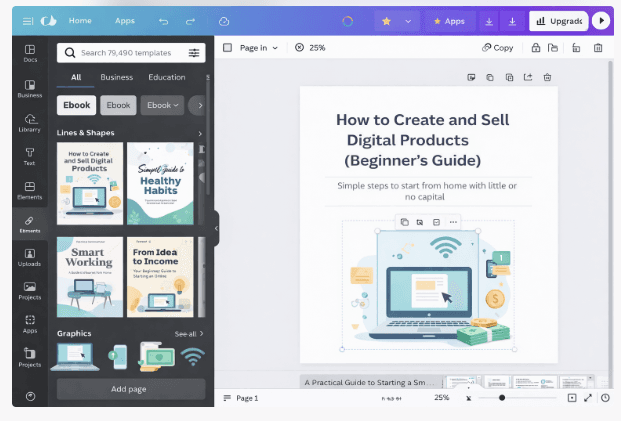
Step 5: Make Your Digital Product Look Professional
Even if the content is great, poor presentation can reduce sales. To make your product look professional:
Use a clean cover design
Use readable fonts
Break content into sections
Add headings and bullet points
Canva offers ready-made templates that make this easy, even for beginners. Professional appearance builds trust and increases perceived value.
Step 6: Price Your Digital Product Correctly
Pricing is one of the hardest parts for beginners. Common beginner mistake: underpricing due to lack of confidence. Beginner pricing guidelines:
Simple templates or checklists: ₦2,000 – ₦5,000
Detailed guides or ebooks: ₦5,000 – ₦15,000
Courses or bundles: ₦15,000 and above
Price based on:
The problem you are solving
The value of the solution
Your target audience
Remember, people are paying for results, not pages.
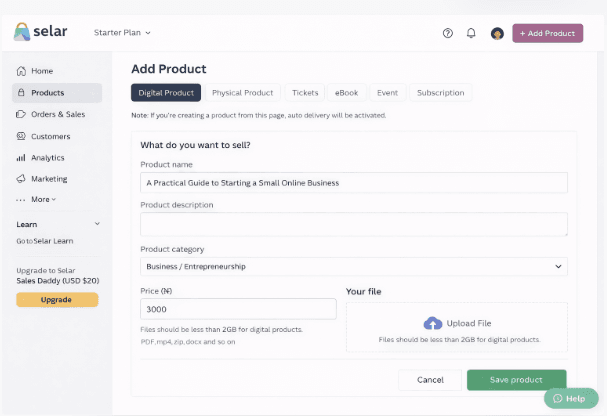
Step 7: Choose Where to Sell Your Digital Product
You don’t need a website to start selling digital products. Below are some of the beginner-friendly platforms you can start with.
Selar
Gumroad
Paystack Storefront
WhatsApp with payment links
These platforms handle:
Payment processing
File delivery
Customer access
This allows you to focus on marketing and improving your product.
Step 8: Create a Simple Sales Page That Converts
Your sales page doesn’t need to be complicated.
A simple sales page should answer:
What problem does this solve?
Who is it for?
What will the buyer learn or gain?
Why should they trust you?
Basic structure:
Clear headline
Problem explanation
Solution overview
What’s included
Price and call-to-action
Honesty and clarity convert better than hype.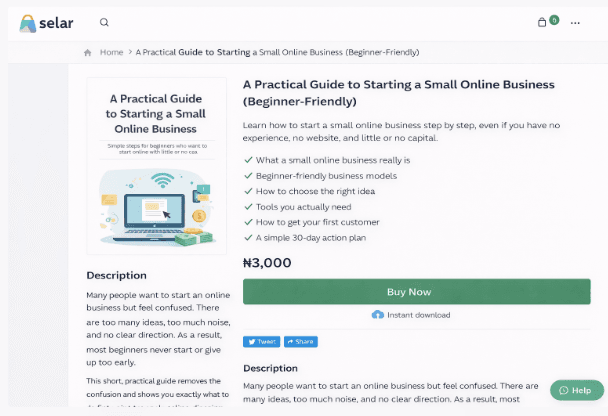
Step 9: How to Sell Digital Products as a Beginner
You don’t need paid ads to get your first sales. Free selling methods are as follows.
WhatsApp Status
Facebook groups
Personal Facebook profile
Instagram posts
Blog articles
Many beginners make their first sales from people they already know. Consistency and value matter more than large followings.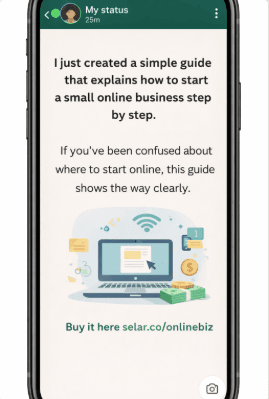
Step 10: Improve, Update, and Scale Your Product
Your first product doesn’t have to be perfect. After selling:
Collect feedback
Fix weak areas
Add bonuses
Improve clarity
Over time, you can:
Increase the price
Bundle products
Create advanced versions
Turn guides into courses
Digital products grow with experience.
Frequently Asked Questions (FAQs)
Do I need to be an expert to create a digital product?
No, you do not need to be an expert to create a digital product. Many successful digital products are created by people who are simply a few steps ahead of their audience. If you understand a problem better than someone else and can explain the solution clearly, you already have something valuable to sell.
Most beginners make the mistake of waiting until they feel “qualified.” In reality, buyers care more about clarity, simplicity, and practical guidance than advanced expertise. If your product helps someone save time, avoid mistakes, or learn faster, it has value.
Can I create digital products using only my phone?
Yes, it is completely possible to create and sell digital products using only a smartphone. Many creators write content using note apps or Google Docs, design covers using Canva mobile, and sell products through platforms that work perfectly on mobile devices.
For beginners, a phone is enough to:
Write guides or ebooks
Design simple templates
Upload products to selling platforms
Promote products on social media
While a laptop can make some tasks easier, it is not a requirement to get started.
How long does it take to create a digital product?
The time required depends on the type of product and your level of preparation. Simple products like checklists or templates can be created in a few hours or days. More detailed guides or ebooks may take one to two weeks, especially if you are working part-time.
The key is not to rush, but also not to overthink. Many beginners delay publishing because they want everything to be perfect. It is better to launch a simple version, get feedback, and improve over time.
Do digital products really sell in Nigeria and other African countries?
Yes, digital products sell very well in Nigeria and across Africa, especially when they solve real problems. Topics like business, skills, education, finance, career growth, and technology perform particularly well.
The growth of mobile payments and digital platforms has made it easier than ever for people to pay for digital products. As long as your product is useful, affordable, and clearly explained, people are willing to buy.
How do I know what price to set for my digital product?
Pricing should be based on the value your product provides, not just the number of pages. Ask yourself:
What problem does this solve?
How much time or stress does it save?
What would someone pay to avoid this problem?
Beginner products are usually priced lower to encourage trust, but you should still charge enough to reflect value. Over time, as your confidence and audience grow, you can increase your prices.
Do I need a website to sell digital products?
No, you do not need a website to start selling digital products. Many beginners sell successfully using platforms that handle payments and delivery for them.
You can sell through:
Digital product platforms
Payment links
Social media
Messaging apps
A website can be useful later, but it is not necessary at the beginning.
Can I create more than one digital product?
Yes, and this is actually recommended. Many creators start with one product and later expand into bundles, advanced versions, or related products.
Multiple products allow you to:
Increase income
Serve different audiences
Offer upgrades and bonuses
Start with one product, then build from there.
Is selling digital products a long-term business?
Yes, selling digital products can become a long-term business if done correctly. With consistent improvement, proper marketing, and customer trust, digital products can generate income for years. The key is to keep learning, adapting, and focusing on providing real value.
Conclusion
Learning how to create and sell digital products is one of the most valuable skills in today’s digital economy. It allows you to turn knowledge into income, help others solve problems, and build something scalable with minimal cost.
You don’t need to be famous, rich, or highly technical. You only need a clear problem, a useful solution, and the willingness to start. Start small, learn fast, and improve continuously. That is how successful digital product creators are built.
I believe this How to Create and Sell Digital Products guide was helpful. Feel free to use the comment section for any questions, and don’t forget to share this article on your social media accounts.